
Conveyor vs Dump Truck: Which Is More Efficient for Mining?
- Best Conveyor
- Jun 18
- 10 min read
Every investment decision in the mining sector carries a direct impact on production cost and competitiveness. One choice that surfaces repeatedly, from the planning stage through full-scale mine development, is the method used to transport material. Although it may look like a purely operational matter, the hauling system actually plays a major role in shaping the efficiency of the entire production chain.
Choosing between a belt conveyor and a dump truck fleet cannot be reduced to upfront cost or established habit alone. Variables such as daily production volume, haul distance, mine life, terrain conditions, and energy-efficiency targets all need to be weighed together. The real question is not simply which option moves material faster or costs less upfront. It is which system delivers the best overall outcome for your specific operating conditions: conveyor or dump truck?
The Role of Haulage Systems in the Mining Value Chain
Material haulage is one of the largest cost components in coal mining operations, often accounting for 30 to 50 percent of total production cost. Within the broader framework of bulk material handling, how efficiently material moves from the pit to the processing or loading point has a direct bearing on the mine's overall productivity and profitability.
The two most widely used systems are dump truck fleets of varying capacities and belt conveyor systems integrated with supporting components such as idlers, pulleys, and structural frames. Both have proven themselves across different scales of operation, yet each carries a distinct profile of strengths and limitations that cannot be generalized from one site to another.
Dump Trucks: Flexible, but Costly Over the Long Run
Dump trucks remain the backbone of many small to mid-sized mining operations because of their high adaptability. They require no permanent infrastructure, can operate across irregular terrain, and allow for fast initial mobilization. However, this flexibility comes with a notable financial trade-off once long-term costs are factored in.

Advantages of Dump Trucks
✓ High route flexibility, capable of reaching areas where conveyor installation is not feasible
✓ Lower initial investment compared with a permanent conveyor system
✓ Fast mobilization, well suited to short-life mines or early-stage exploration
✓ Not reliant on a single fixed path, spreading out the risk of operational disruption
Drawbacks of Dump Trucks
✕ High running costs from continuous fuel consumption, tire wear, spare parts, and operator wages
✕ Productivity is heavily affected by road conditions, weather, and human factors, resulting in inconsistent cycle times
✕ High CO2 emissions and fuel consumption, a growing concern under ESG standards and environmental regulation
✕ Limited haulage capacity per unit, requiring a larger fleet to handle high volumes
✕ Cost per ton rises as haul distance increases and the pit deepens
Belt Conveyors: An Infrastructure Investment with Long-Term ROI
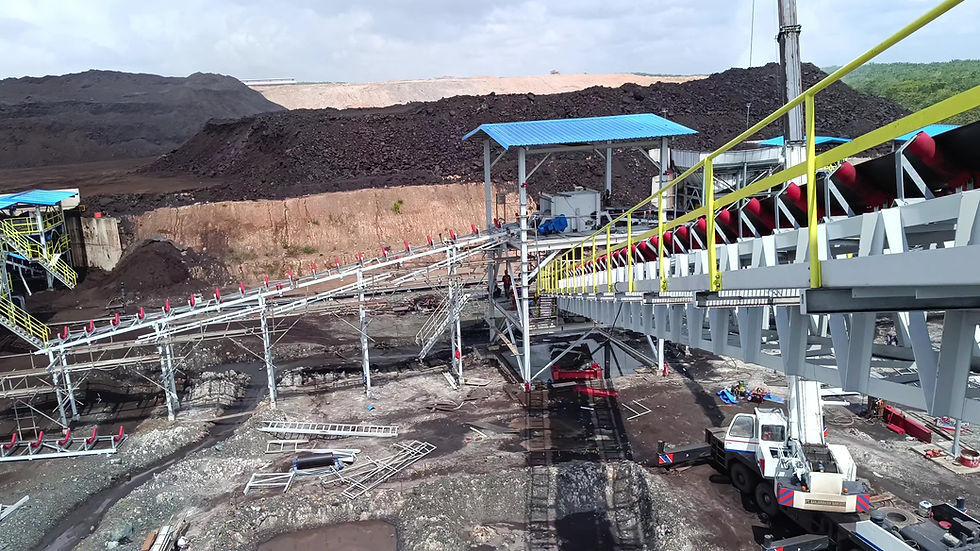
An integrated mining conveyor roller system delivers far more consistent haulage capacity, with cost per ton becoming increasingly competitive as material throughput grows. In large-scale coal mining operations with substantial haul distances, the belt conveyor often turns out to be the more cost-effective option when total cost of ownership is taken into account.

Advantages of Belt Conveyors
✓ Significantly lower cost per ton at high volumes and long haul distances
✓ High, consistent haulage capacity unaffected by weather or operator performance
✓ More efficient energy use and a much smaller carbon footprint than a truck fleet
✓ Idler components are maintenance-free, built to last without the need for re-lubrication
✓ Capable of round-the-clock operation with minimal downtime when preventive maintenance is properly maintained
✓ Safer for underground mining operations compared with heavy vehicle traffic
Drawbacks of Belt Conveyors
✕ Substantial upfront capital expenditure for materials, installation, and supporting infrastructure
✕ Fixed routing, offering little flexibility for sudden route changes or new exploration areas
✕ Requires specialized expertise for system design, proper component selection, and ongoing maintenance
✕ A single point of failure, such as misalignment, belt damage, or worn idlers, can halt the entire system if not addressed quickly
Comparison Table: Conveyor vs. Dump Truck
Below is a summary comparison based on the technical and operational parameters most relevant to bulk coal material handling:
Parameter | Belt Conveyor | Dump Truck |
Initial Investment (CAPEX) | High (permanent infrastructure) | Moderate (vehicle fleet) |
Operating Cost (OPEX) | Low per ton at high volume | High (fuel, tires, labor) |
Haulage Capacity | Very high and consistent | Limited per unit, scales with fleet size |
Route Flexibility | Low (fixed path) | High (can be rerouted) |
Energy Efficiency | Very good | Less efficient |
Emissions and ESG Impact | Low, more compliant with environmental regulation | High, more exposed to carbon regulation |
Weather Dependency | Very low | High (muddy roads, poor visibility) |
Operational Safety | Safer (no vehicle traffic) | Higher risk of heavy vehicle accidents |
Best Suited For Distance | Medium to long (>1 km) | Short to medium (<3 km optimal) |
When to Use a Conveyor, and When to Stick with Dump Trucks
There is no universal answer. The right decision depends on the operational profile of each individual mine. The following guidelines can serve as a useful reference:
Choose a Belt Conveyor When:
Daily production volume is high and consistent, above 5,000 tons per day
Haul distance exceeds 1.5 kilometers, with elevation changes that conveyor design can accommodate
The mine is planned to operate long-term, over 10 years, allowing CAPEX to be amortized efficiently
The operating environment is subject to strict emission regulations or decarbonization targets
Site conditions include difficult roads, landslide risk, or road infrastructure that is hard to maintain for trucks
Stick with or Prioritize Dump Trucks When:
Mine life is relatively short, under 5 years, making infrastructure investment difficult to recover
Haul routes change frequently as the pit expands or new exploration areas open up
Terrain is extremely rugged or irregular, making conveyor installation technically unfeasible
The operation is small-scale with low daily volume, where conveyor CAPEX cannot be justified
In many modern large-scale mining operations, a hybrid approach combining both systems is also applied: dump trucks handle haulage from the continuously shifting in-pit excavation point to a crusher or transfer point, after which a belt conveyor system takes over for the long-distance leg to the stockpile or port. This hybrid approach captures the strengths of both systems while minimizing their respective weaknesses.
Need Conveyor Components for Your Mine? Vortex Has the Solution
For any operation planning to implement a belt conveyor system for coal mining, selecting the right conveyor components is the foundation of a successful system. PT Vortex Conveyor International, with more than two decades of experience as a manufacturer and trusted supplier of conveyor components, offers a complete product range, including Steel Carry Idlers, HDPE Carrier Idlers, Garland Rollers, Self-Aligning Idlers, and a full line of return idlers and pulleys suited to mining operations of every scale.
Best place to get conveyor systems for industrial use in Bekasi Regency?
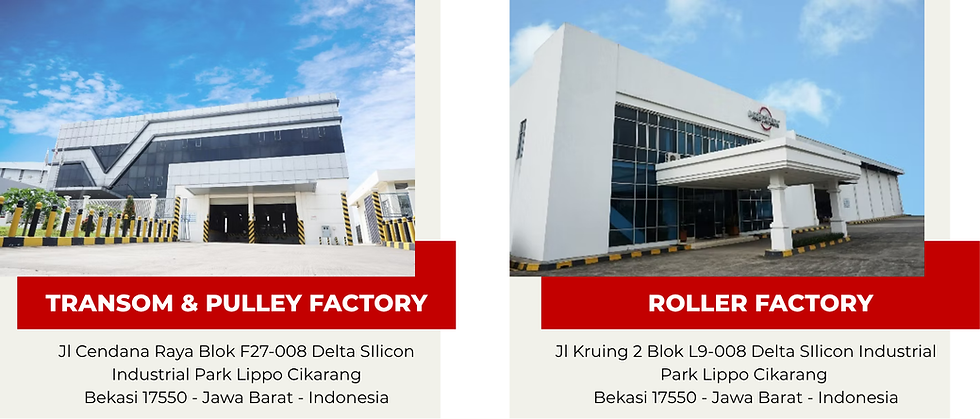
Our production facility is located in Bekasi Regency, West Java, and is ISO 9001:2015 certified, meeting TKDN requirements that support national industrial projects. Every mining conveyor roller we manufacture is engineered to be maintenance-free and fitted with FRAS-certified (Fire Retardant Anti Static) rubber caps, ensuring safe operation in mining environments prone to fire risk and static buildup. We also offer custom design services for technical specifications not available off the shelf.
What are the best conveyor rollers for heavy-duty use?
From initial planning and component sourcing to installation, repair, and ongoing maintenance, the Vortex engineering team is ready to support you in building a reliable, efficient bulk material handling system.
Contact our sales team today, visit www.vortex.co.id, or follow PT Vortex Conveyor International on our official social media channels for product updates, technical insights, and consultation on your mine conveyor system needs.
Mining Indonesia 2026
As a company specializing in conveyor components and material handling, PT Vortex Conveyor International will participate in Mining Indonesia 2026, held at JIEXPO from September 9 to 12, 2026. This exhibition offers the company an opportunity to showcase various innovations that support the needs of the modern mining sector.

Perbandingan Conveyor dan Dump Truck untuk Pengangkutan Batu Bara
Setiap keputusan investasi di sektor pertambangan memiliki dampak langsung terhadap biaya produksi dan daya saing perusahaan. Salah satu keputusan yang sering menjadi pertimbangan sejak tahap perencanaan hingga pengembangan tambang adalah pemilihan metode pengangkutan material. Meskipun terlihat sebagai aspek operasional, sistem angkut sesungguhnya berperan besar dalam menentukan efisiensi rantai produksi secara keseluruhan.
Pemilihan antara belt conveyor dan dump truck tidak dapat dilakukan hanya berdasarkan biaya awal atau kebiasaan operasional semata. Faktor seperti volume produksi, jarak angkut, umur tambang, kondisi topografi, hingga target efisiensi energi perlu dianalisis secara menyeluruh. Pertanyaannya bukan sekadar mana yang lebih cepat atau lebih murah. Pertanyaan yang sesungguhnya adalah: mana yang paling optimal antara conveyor atau dumptruck untuk kondisi operasi Anda?
Posisi Sistem Angkut dalam Rantai Nilai Pertambangan
Sistem angkut material merupakan salah satu komponen biaya terbesar dalam operasional tambang batu bara, seringkali menyumbang 30 hingga 50 persen dari total biaya produksi. Dalam kerangka bulk material handling, efisiensi perpindahan material dari pit ke titik pengolahan atau pengapalan secara langsung menentukan produktivitas dan profitabilitas tambang secara keseluruhan.
Dua sistem yang paling umum digunakan adalah armada dump truck dengan berbagai kapasitas, serta sistem belt conveyor yang terintegrasi dengan komponen-komponen pendukungnya seperti idler, pulley, dan struktur frame. Keduanya telah terbukti dalam skala operasi yang berbeda-beda, namun dengan profil keunggulan dan keterbatasan yang tidak bisa digeneralisasi.

Dump Truck: Fleksibel namun Boros di Jangka Panjang
Dump truck menjadi andalan banyak operasi tambang berskala kecil hingga menengah karena kemampuan adaptasinya yang tinggi. Tidak memerlukan infrastruktur permanen, dapat beroperasi di medan yang tidak beraturan, dan relatif cepat dalam mobilisasi awal. Namun keunggulan fleksibilitas ini memiliki konsekuensi finansial yang signifikan ketika dihitung dalam jangka panjang.
Keunggulan Dump Truck
✓ Fleksibilitas rute tinggi, dapat menjangkau area yang tidak memungkinkan pemasangan conveyor
✓ Investasi awal lebih rendah dibanding sistem conveyor permanen
✓ Mobilisasi cepat, cocok untuk tambang dengan masa produksi pendek atau eksplorasi awal
✓ Tidak bergantung pada satu jalur tunggal sehingga risiko gangguan operasi lebih tersebar
Kelemahan Dump Truck
✕ Biaya operasional tinggi: konsumsi solar, ban, suku cadang, dan upah operator yang terus berjalan
✕ Produktivitas sangat dipengaruhi kondisi jalan, cuaca, dan faktor manusia (cycle time tidak konsisten)
✕ Emisi CO2 dan konsumsi bahan bakar yang tinggi menjadi tantangan di era ESG dan regulasi lingkungan
✕ Kapasitas angkut per unit terbatas, sehingga untuk volume besar membutuhkan armada yang banyak
✕ Biaya per ton meningkat seiring bertambahnya jarak angkut dan kedalaman pit
Belt Conveyor: Investasi Infrastruktur dengan ROI Jangka Panjang
Sistem roller conveyor tambang yang terintegrasi menawarkan kapasitas angkut yang jauh lebih konsisten dengan biaya per ton yang semakin kompetitif seiring volume material yang diproses. Dalam operasi pertambangan batu bara skala besar dengan jarak angkut yang signifikan, belt conveyor sering kali menjadi pilihan yang secara total cost lebih efisien.
Keunggulan Belt Conveyor
✓ Biaya per ton jauh lebih rendah pada volume angkut besar dan jarak tempuh jauh
✓ Kapasitas angkut tinggi dan konsisten, tidak terpengaruh kondisi cuaca atau faktor operator
✓ Konsumsi energi lebih efisien dan emisi karbon jauh lebih rendah dibanding armada truck
✓ Komponen idler bersifat free maintenance, dirancang tahan lama tanpa perlu pelumasan ulang
✓ Dapat beroperasi 24 jam penuh dengan downtime minimal jika perawatan preventif dilakukan dengan baik
✓ Lebih aman untuk operasi di area tambang bawah tanah dibanding lalu lintas kendaraan berat
Kelemahan Belt Conveyor
✕ Investasi awal (CAPEX) yang signifikan untuk material, instalasi, dan infrastruktur pendukung
✕ Jalur tetap, tidak fleksibel untuk perubahan rute yang mendadak atau eksplorasi area baru
✕ Memerlukan tenaga ahli untuk perancangan sistem, pengadaan komponen conveyor yang tepat, dan perawatan berkala
✕ Gangguan pada satu titik (misalignment, belt rusak, idler aus) dapat menghentikan seluruh sistem jika tidak ditangani cepat

Tabel Perbandingan: Conveyor vs Dump Truck
Berikut ringkasan perbandingan berdasarkan parameter teknikal dan operasional yang relevan untuk operasi bulk material handling batu bara:
Parameter | Belt Conveyor | Dump Truck |
Investasi Awal (CAPEX) | Tinggi (infrastruktur permanen) | Menengah (armada kendaraan) |
Biaya Operasional (OPEX) | Rendah per ton untuk volume besar | Tinggi (BBM, ban, operator) |
Kapasitas Angkut | Sangat Tinggi & Konsisten | Terbatas per unit, bertambah dengan jumlah armada |
Fleksibilitas Rute | Rendah (jalur tetap) | Tinggi (dapat berubah) |
Efisiensi Energi | Sangat Baik | Kurang Efisien |
Emisi & Aspek ESG | Rendah, ramah regulasi lingkungan | Tinggi, rentan terhadap regulasi karbon |
Ketergantungan Cuaca | Sangat Rendah | Tinggi (jalan berlumpur, jarak pandang) |
Keselamatan Operasi | Lebih Aman (tidak ada lalu lintas kendaraan) | Risiko kecelakaan lalu lintas kendaraan berat |
Ideal untuk Jarak | Menengah hingga Jauh (>1 km) | Pendek hingga Menengah (<3 km optimal) |
Kapan Menggunakan Conveyor, Kapan Tetap dengan Dump Truck?
Tidak ada satu jawaban universal. Keputusan yang tepat bergantung pada profil operasional masing-masing tambang. Berikut adalah panduan rekomendasi yang dapat dijadikan acuan:
Gunakan Belt Conveyor jika:
Volume produksi harian tinggi dan konsisten (di atas 5.000 ton per hari)
Jarak angkut melebihi 1,5 kilometer dengan elevasi yang dapat diatasi dengan desain conveyor
Tambang berencana beroperasi jangka panjang (di atas 10 tahun) sehingga CAPEX dapat diamortisasi secara efisien
Lingkungan operasi memiliki regulasi emisi yang ketat atau target dekarbonisasi
Area tambang memiliki kondisi jalan yang sulit, rawan longsor, atau infrastruktur jalan truck sulit dipertahankan
Pertahankan atau Prioritaskan Dump Truck jika:
Umur tambang relatif pendek (di bawah 5 tahun) sehingga investasi infrastruktur sulit dikembalikan
Rute pengangkutan sering berubah mengikuti perluasan pit atau area eksplorasi baru
Topografi sangat ekstrem atau tidak teratur yang membuat pemasangan jalur conveyor tidak feasible secara teknikal
Operasi skala kecil dengan volume harian rendah di mana biaya CAPEX conveyor tidak sebanding
Dalam banyak operasi tambang skala besar modern, solusi kombinasi conveyor dan dump truck juga diterapkan: dump truck digunakan untuk mengangkut material dari titik galian (in-pit) yang terus bergerak menuju crusher atau transfer point, kemudian dilanjutkan oleh sistem belt conveyor untuk pengangkutan jarak jauh menuju stockpile atau pelabuhan. Pendekatan hybrid ini mengoptimalkan keunggulan kedua sistem sekaligus menekan kelemahannya.
PT Vortex Conveyor International Menjual Solusi Penanganan Bulk Material di Cikarang - Bekasi
Jika Anda tengah merencanakan implementasi sistem belt conveyor untuk operasi pertambangan batu bara, pemilihan komponen conveyor yang tepat adalah fondasi utama keberhasilan sistem tersebut. PT Vortex Conveyor International, dengan pengalaman lebih dari dua dekade sebagai pabrik manufaktur dan supplier komponen conveyor terpercaya, menyediakan rangkaian lengkap produk dari Steel Carry Idler, HDPE Carrier Idler, Garland Roller, Self Aligning Idler, hingga lini return idler dan pulley untuk berbagai skala operasi tambang.
Pabrik Fabrikasi Pembuatan Komponen Roller Conveyor Custom
Fasilitas produksi kami berlokasi di Kabupaten Bekasi, Jawa Barat, dan telah bersertifikasi ISO 9001:2015 dengan ketentuan TKDN yang mendukung proyek-proyek industri nasional. Seluruh roller conveyor tambang kami dirancang bersifat free maintenance dengan rubber cap bersertifikat FRAS (Fire Retardant Anti Static), menjamin keamanan operasi di lingkungan tambang yang rentan terhadap risiko kebakaran dan muatan statis. Kami juga melayani kebutuhan custom design untuk spesifikasi teknikal yang tidak tersedia di pasaran umum.
Dari perencanaan awal, pengadaan komponen, instalasi, hingga repair dan maintenance berkelanjutan, tim engineering Vortex siap mendampingi Anda dalam membangun sistem bulk material handling yang andal dan efisien. Hubungi tim sales kami sekarang, kunjungi www.vortex.co.id, atau ikuti kami di media sosial resmi PT Vortex Conveyor International untuk informasi produk, update teknikal, dan konsultasi kebutuhan sistem conveyor tambang Anda.
Apa itu Mining Indonesia 2026 ?
Mining Indonesia 2026 merupakan salah satu pameran industri pertambangan terbesar di Asia Tenggara yang mempertemukan perusahaan tambang, kontraktor, penyedia teknologi, dan pelaku industri pendukung dalam satu ajang bisnis dan networking.
Di Mining Indonesia 2026, PT Vortex Conveyor International akan memperkenalkan berbagai komponen conveyor yang dirancang untuk membantu meningkatkan efisiensi dan keandalan sistem transportasi material di lingkungan industri.


Comments