
How Self Aligning Idlers Work in Belt Conveyor Systems
A belt drifting to one side rarely looks like a big problem on day one. It starts with the belt edge touching the frame, then material spills along the side of the conveyor, and the maintenance team has to keep going back to readjust. For Maintenance Supervisors and Plant Managers, this pattern is frustrating and costly, because every adjustment means downtime. One way to reduce the problem is to use a self-aligning idler.

Self-Aligning Idler vs. Standard Idler in Solving Belt Mistracking
A self-aligning idler is designed to guide the belt back to the center of the conveyor automatically, while a standard idler only supports the belt and cannot correct its position. With a standard conveyor idler, a belt that starts to drift will keep drifting until someone adjusts it by hand. With a self-aligning idler, the correction comes from a mechanism built into the idler itself.
The differences between the two can be summarized as follows.
Main function: a standard idler supports the belt, while a self-aligning idler supports it and also helps correct its position.
Correction method: a standard idler relies on manual adjustment, while a self-aligning idler uses a pivoting frame and guide rollers.
Reliance on the maintenance team: repeated adjustments on standard idlers can take up a lot of time, while a self-aligning idler helps reduce that intervention.
Suitability: a standard idler is enough for stable sections, while a self-aligning idler is better suited to points prone to mistracking.
What Causes Belt Mistracking on Conveyor Idlers
Belt mistracking happens when the belt does not run along the center of the conveyor and drifts to one side. The causes vary. Common examples include material loaded off-center, idlers or frames that are not straight, and material sticking to rollers and pulleys, which makes the contact surface uneven. Because the causes differ, handling mistracking should start with identifying the source of the problem rather than just correcting the symptom.
Sticky material such as wet coal or mud is a cause that often goes unnoticed. When material builds up unevenly on a roller, the belt receives an unbalanced push and slowly shifts sideways. This is why keeping the belt and its contact components clean is closely tied to stable tracking.
How a Self-Aligning Idler Works
A Self-Aligning Carry and Return Idler works through a pivoting frame and guide rollers. When the belt drifts toward the edge, it touches the guide roller, and the frame, which can rotate on a pivot point, adjusts its angle to push the belt back toward the center. The idler is a single assembly of rollers and a frame designed for this purpose, not an ordinary roller with an add-on.
On the return side, the Vee Return Idler and Spiral Return Idler also help with belt tracking. The Spiral Return Idler is designed to help clean material off the belt as well, since buildup is often one of the triggers of mistracking.

How Mistracking Affects Spillage and Belt Wear
Mistracking directly affects two things: material spillage and belt condition. A drifting belt carries material off its path, causing spillage that requires cleanup and can disrupt the work area. Belt edges that rub against the frame or other structures are also at risk of wearing out sooner.
Self-aligning idlers help reduce these risks by keeping the belt on its path. Keep in mind, however, that this type of idler does not replace fixing the root cause. If mistracking comes from off-center loading or a skewed structure, those issues still need to be corrected.
From an operational standpoint, the impact goes beyond material and belt. Spillage that piles up under the conveyor adds to the cleaning workload, and repeated belt adjustments keep the maintenance team in reactive mode. Reducing mistracking gives the team room to move toward scheduled preventive maintenance.
Installation Points and Combining with Skirtboards and Belt Cleaners
The number and position of self-aligning idlers depend on the conditions of each conveyor, such as belt length, material characteristics, and the points that have historically been prone to mistracking. For this reason, there is no standard figure that applies to every installation, and the decision should be based on an engineering evaluation of the specific conveyor.
This evaluation usually considers past mistracking points, belt condition, loading patterns, and the characteristics of the material being carried. After installation, regular checks of the belt path and idler alignment are still necessary. The rollers themselves are maintenance-free, so inspections can focus on belt position, the frame, and the surrounding area.
A self-aligning idler works best as part of a broader solution. Skirtboards help keep material on the belt in the loading zone, while belt cleaners help reduce material carried back on the return side. Together, they keep the belt in position and tackle the sources of spillage from several points at once.
Get Advice on Choosing a Self-Aligning Idler from PT Vortex Conveyor International
A standard idler supports the belt, while a self-aligning idler supports it and helps correct its position. For conveyors that often suffer from mistracking, this type is worth considering as part of the solution, alongside tracing the main cause in the field.
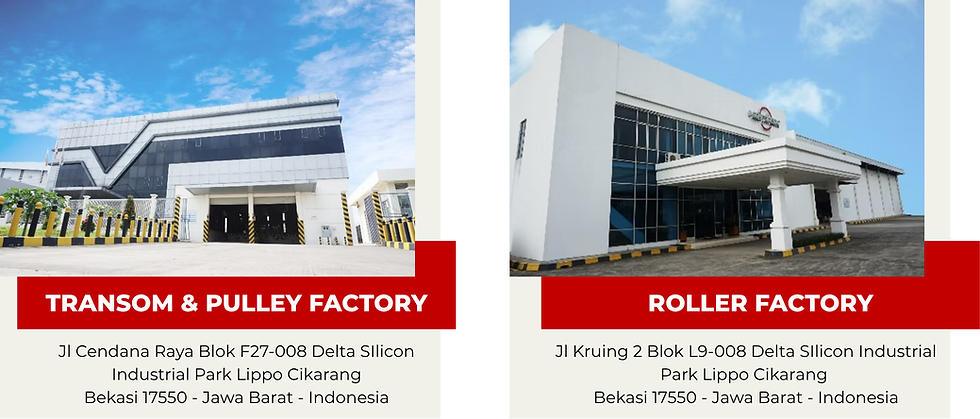
PT Vortex Conveyor International manufactures Self-Aligning Idlers and a range of return idlers at its facility in Cikarang, Bekasi, with a team of professional engineers on hand to help determine the right configuration. Contact our sales team to discuss your conveyor conditions and find the right mistracking solution.

Fungsi Self Aligning Idler dalam Menjaga Posisi Belt Conveyor
Belt yang bergeser ke satu sisi jarang muncul sebagai masalah besar di hari pertama. Awalnya hanya tepi belt yang mulai menyentuh frame, lalu muncul tumpahan material di sisi conveyor, dan tim maintenance harus turun berulang kali untuk menyetel ulang. Bagi Maintenance Supervisor dan Plant Manager, pola ini sangat merepotkan dan memerlukan biaya yang tidak murah, karena setiap penyetelan berarti waktu henti. Salah satu pendekatan untuk menekannya adalah dengan menggunakan self aligning idler.
Perbedaan Self Aligning Idler dan Idler Standar dalam Mengatasi Belt Mistracking
Self aligning idler dirancang untuk membantu mengembalikan posisi belt ke tengah conveyor secara otomatis, sedangkan idler standar hanya menopang belt tanpa fungsi koreksi posisi. Pada Idler Conveyor standar, belt yang mulai bergeser akan terus bergeser sampai ada penyetelan manual. Pada self aligning idler, koreksi dilakukan oleh mekanisme di dalam desain idler itu sendiri.
Perbedaan keduanya dapat diringkas pada beberapa aspek berikut.
Fungsi utama: idler standar menopang belt, sedangkan self aligning idler menopang sekaligus membantu mengoreksi posisi belt.
Cara koreksi: idler standar bergantung pada penyetelan manual, sedangkan self aligning idler memakai pivoting frame dan guide roller.
Ketergantungan pada tim maintenance: penyetelan berulang pada idler standar dapat menyita waktu, sementara idler otomatis membantu mengurangi intervensi tersebut.
Kesesuaian: idler standar cukup untuk jalur yang stabil, sedangkan self aligning idler relevan untuk titik yang rawan mistracking.

Penyebab Belt Mistracking pada Idler Conveyor
Belt mistracking adalah kondisi ketika belt tidak berjalan di jalur tengah conveyor dan bergeser ke salah satu sisi. Penyebab umumnya beragam, misalnya pemuatan material yang tidak berada di tengah belt, idler atau frame yang tidak lurus, serta material yang menempel pada roller dan pulley sehingga permukaan kontak menjadi tidak rata. Karena penyebabnya berbeda-beda, penanganan mistracking sebaiknya dimulai dengan mengenali sumber masalahnya, bukan hanya mengoreksi gejalanya.
Material lengket seperti batu bara basah atau lumpur menjadi contoh yang sering luput dari perhatian. Ketika material menumpuk tidak merata pada roller, belt menerima dorongan yang tidak seimbang dan perlahan bergeser. Itulah sebabnya kebersihan belt dan komponen kontak berkaitan erat dengan stabilitas tracking.
Bagaimana Mekanisme Kerja Self Aligning Idler?
Self Aligning Carry & Return Idler bekerja dengan pivoting frame dan guide roller. Ketika belt bergeser ke tepi, belt menyentuh guide roller, dan frame yang dapat berputar pada titik poros menyesuaikan sudutnya sehingga mendorong belt kembali ke arah tengah. Idler ini merupakan satu kesatuan assembly yang terdiri dari roller dan frame yang dirancang untuk fungsi tersebut, bukan sekadar roller biasa yang diberi tambahan.
Untuk sisi return, Vee Return Idler dan Spiral Return Idler turut membantu belt tracking. Spiral Return Idler juga dirancang membantu membersihkan material yang menempel pada belt, yang kerap menjadi salah satu pemicu mistracking.
Dampak Belt Mistracking terhadap Spillage dan Keausan Belt
Mistracking berdampak langsung pada dua hal, yaitu tumpahan material dan kondisi belt. Belt yang bergeser membawa material keluar dari jalurnya, sehingga terjadi spillage yang menuntut pembersihan dan dapat mengganggu area kerja. Tepi belt yang bergesekan dengan frame atau struktur lain juga berisiko mengalami keausan lebih cepat.
Idler otomatis seperti self aligning idler membantu mengurangi risiko tersebut dengan menjaga belt tetap berada pada jalurnya. Perlu dipahami bahwa idler ini bukan pengganti penanganan akar masalah. Bila mistracking disebabkan oleh pemuatan yang tidak sentris atau struktur yang miring, penyebab tersebut tetap perlu dikoreksi.
Dari sudut pandang operasional, dampak ini tidak berhenti pada material dan belt. Tumpahan yang menumpuk di bawah conveyor menambah pekerjaan pembersihan, sedangkan penyetelan belt yang berulang membuat tim maintenance terus berada dalam mode reaktif. Mengurangi mistracking berarti memberi ruang bagi tim untuk beralih ke preventive maintenance yang terjadwal.

Titik Pemasangan dan Kombinasi dengan Skirtboard serta Belt Cleaner
Penentuan jumlah dan posisi self aligning idler bergantung pada kondisi conveyor, seperti panjang jalur, karakter material, dan titik yang selama ini rawan mistracking. Karena itu, tidak ada angka baku yang berlaku untuk semua instalasi, dan penentuannya sebaiknya melalui evaluasi engineering pada conveyor yang bersangkutan.
Evaluasi tersebut biasanya mempertimbangkan titik mistracking yang pernah terjadi, kondisi belt, pola pemuatan, dan karakter material yang diangkut. Setelah instalasi, pemeriksaan berkala terhadap jalur belt dan kesejajaran idler tetap diperlukan. Roller pada idler sendiri bersifat free maintenance, sehingga fokus pemeriksaan dapat diarahkan pada posisi belt, frame, dan area sekitar.
Self aligning idler bekerja paling baik sebagai bagian dari solusi yang lebih luas. Skirtboard membantu menahan material di area belt pada zona loading, sedangkan belt cleaner membantu mengurangi material yang terbawa kembali pada sisi return. Dengan demikian, posisi belt terjaga dan sumber tumpahan ditekan dari beberapa titik sekaligus.
Konsultasi Pemilihan Self Aligning Idler bersama PT Vortex Conveyor International
Idler standar menopang belt, sementara self aligning idler menopang sekaligus membantu mengoreksi posisinya. Untuk conveyor yang sering mengalami mistracking, tipe ini layak dipertimbangkan sebagai bagian dari solusi, dengan tetap menelusuri penyebab utama di lapangan.
PT Vortex Conveyor International memproduksi Self Aligning Idler serta berbagai return idler dari fasilitas manufaktur di Cikarang, Bekasi, dengan dukungan tim engineering profesional untuk membantu menentukan konfigurasi yang sesuai. Hubungi tim sales kami untuk mendiskusikan kondisi conveyor Anda dan menemukan solusi mistracking yang tepat.


Comments