
Impact Idler: Why the Loading Point Is the Most Critical Area
- Best Conveyor
- Jun 24
- 10 min read
How to Reduce Belt Damage at Conveyor Loading Points ?
What Is the Function of an Impact Idler in Mining Conveyors
In many mining and heavy industrial operations, belt conveyor failures are commonly treated as component-level problems. In reality, the root cause often traces back to a single area that receives insufficient attention during both design and maintenance: the loading point. This zone is the first point of contact for material impact energy, and it directly determines the magnitude of stress imposed on the belt and its underlying support components.
When protection at the loading zone is inadequate, the consequences extend well beyond increased component replacement frequency. Production downtime, emergency repair costs, lost throughput, and potential safety incidents can all escalate significantly. This is why experienced conveyor engineers and operators consistently identify the loading point as one of the highest-priority areas requiring dedicated management within any bulk material handling system.

What Is a Loading Point, and Why Is It So Vulnerable?
A loading point is the location within a belt conveyor system where bulk material is deposited onto the belt, typically through a chute or hopper. It is here that the full kinetic load of the material concentrates within a narrow area.
In large-scale bulk material handling operations involving coal, mineral ore, or limestone, material is frequently discharged from heights ranging from one to several meters. The greater the material mass and the higher the drop height, the greater the impact energy that must be absorbed by the components below.
Without an adequate damping system, all of these forces are transferred directly to the belt and its supporting components. The consequences can be severe: belt tearing, premature idler failure, or frame deformation within a short period of operation.
Types of Forces Acting in the Impact Loading Zone
At least three types of forces act simultaneously within the loading point zone:
Vertical Impact Force
The kinetic energy of falling material strikes the belt surface perpendicularly. Its magnitude is proportional to the material mass and the square of its velocity.
Lateral Shear Force
Falling material does not always land precisely at the belt centerline, generating sideward shear forces that push the belt out of its intended tracking path.
Cyclic Dynamic Load
Since the loading process is continuous, components in this zone are subjected to fatigue loading, a condition in which repeated stress gradually weakens the material structure even when individual impact magnitudes are not extreme.
The combined effect of these three force types makes the loading point zone the area with the highest component wear rate across the entire conveyor system.
Belt and Component Damage from Impact Loading
The consequences of unmanaged impact loading range from immediately visible failures to hidden damage that only manifests after hundreds of operating hours.
Belt Tearing or Cracking: Heavy material discharged at an unfavorable angle can cause immediate damage to the belt cover or even penetrate through to the carcass.
Belt Surface Deformation: Repeated impacts cause the belt surface to undergo cold deformation, altering its cross-sectional profile and reducing its ability to maintain an optimal trough shape.
Impact Zone Idler Damage: Rollers not engineered to withstand high impact loads are prone to premature bearing failure, shell deformation, or frame fracture well before their intended service life.
Belt Misalignment: Uncontrolled lateral forces displace the belt from its center position, which, if left unaddressed, leads to significant material spillage and severe edge wear.
In mining and heavy industrial operations, each of these failure modes can force an unplanned production shutdown, with belt and component replacement costs potentially reaching tens to hundreds of millions of rupiah per incident.
The Role of Impact Idlers in Load Absorption
Impact idlers are purpose-built for installation in the loading point zone, serving as the primary line of defense between falling material and the conveyor belt. Unlike standard carry idlers, they are equipped with rubber discs or rubber rings on the roller body, which function as integrated shock absorbers.
The operating principle is straightforward yet highly effective: a portion of the impact energy received by the belt is absorbed by the rubber elements before being transmitted to the frame and supporting structure below. This damping action reduces peak stress on the belt during each loading cycle, significantly extending belt service life.
Additionally, idler spacing in the impact zone is typically reduced compared to the standard carry section, generally ranging from 300 to 600 mm depending on material weight, to ensure the belt does not experience excessive deflection between support points.

Retractable Impact Idler: A Solution for Faster Maintenance
One of the greatest challenges at the loading point zone is not only operational protection, but also ease of maintenance. Since this zone absorbs the heaviest loads, its components also require the most frequent replacement. With conventional idler designs, replacing a roller in the impact zone requires technicians to lift the belt first, a time-consuming process that extends downtime duration.
Retractable Impact Idlers address this challenge directly. Their frame design allows the assembly to be retracted or slid sideways, enabling roller replacement without lifting the belt. What previously required hours of labor can now be completed in minutes.
Immediate operational advantages include:
Significantly reduced maintenance downtime, as belt lifting procedures are eliminated.
Lower risk of workplace incidents during component replacement.
Easier replacement encourages maintenance teams to perform servicing on schedule, ensuring idler condition is consistently maintained.
Overall belt service life is extended because damping components are always kept in optimal condition.
It should be noted that impact idler rollers are maintenance-free by design and cannot be disassembled or relubricated. Replacement is carried out as a complete unit, making the retractable design particularly valuable in sustaining uninterrupted operations.
Impact Load Calculation and Specification Recommendations
Selecting the appropriate impact idler specification requires an accurate calculation of actual impact loads. Key input parameters include material flow rate (in tons per hour), drop height, material density, and belt width and speed.
These calculations yield an impact energy value in joules, which then forms the basis for selecting the appropriate idler impact resistance rating. Industry standards such as CEMA (Conveyor Equipment Manufacturers Association) provide load classification guidelines covering a broad range of operating conditions.
For operations handling heavy materials such as run-of-mine coal, iron ore, or blasted ore, the following general specification recommendations should be considered:
Select rubber discs with hardness and thickness matched to the actual field impact rating, not the minimum specification.
Reduce idler spacing in the impact zone to minimize belt deflection.
Ensure roller rubber caps meet FRAS (Fire Retardant Anti Static) standards for operations involving combustible materials such as coal.
Choose frames with low-deflection construction capable of withstanding lateral loads from off-center material discharge.
Undersized specification selection not only shortens component service life but also raises the risk of belt damage, which carries a far greater cost than investing in correctly rated impact idler components.
Looking for the Right Heavy-Duty Impact Idler for Your Industrial Operation?
The loading point zone cannot be compromised. A single undersized component at this critical juncture can trigger a cascading failure that halts the entire production line. This is why selecting an impact idler supplier goes beyond price considerations; it is ultimately a matter of technical reliability and consistent quality.
PT Vortex Conveyor International is a manufacturer and supplier of conveyor components with over two decades of industry experience, serving sectors ranging from coal and mineral mining to cement and fertilizer production. Our Retractable Impact Idlers are engineered for heavy-duty conditions under manufacturing standards certified to ISO 9001:2015, TKDN, and SBUJK.
Our conveyor rollers use FRAS-rated (Fire Retardant Anti Static) rubber caps, meeting operational safety requirements for mining environments and industrial facilities handling combustible materials. All rollers are maintenance-free, requiring no periodic lubrication, which reduces long-term operational costs.
Consult your impact idler and conveyor component requirements directly with our engineering team:
Contact our sales team for technical and commercial proposals tailored to your field specifications.
Visit our website at www.vortex.co.id for complete product information and conveyor system solutions.
Follow PT Vortex Conveyor International on social media for technical updates, industry articles, and the latest offers.

Fungsi Impact Idler dalam Melindungi Belt Conveyor dari Benturan
Dalam banyak operasi pertambangan dan industri berat, kerusakan belt conveyor sering kali dianggap sebagai masalah komponen. Padahal, akar permasalahannya sering berasal dari satu area yang luput mendapatkan perhatian yang cukup saat tahap desain maupun perawatan, yaitu loading point. Area ini menjadi titik pertama yang menerima energi benturan material dan secara langsung menentukan seberapa besar tekanan yang harus ditanggung oleh belt serta komponen pendukung di bawahnya.
Ketika perlindungan pada zona loading tidak memadai, dampaknya tidak hanya berupa peningkatan frekuensi penggantian komponen. Risiko downtime produksi, biaya perbaikan darurat, kehilangan produktivitas, hingga potensi insiden keselamatan dapat meningkat secara signifikan. Karena itulah banyak engineer dan operator conveyor menempatkan loading point sebagai salah satu area paling kritis yang harus dikelola secara khusus dalam sistem bulk material handling.
Apa itu Loading Point dan Mengapa Begitu Rentan?
Loading point adalah titik pada sistem belt conveyor di mana material curah dijatuhkan ke atas belt, umumnya melalui chute atau hopper. Di sinilah seluruh beban kinetik material berpusat dalam satu area yang sempit.
Pada operasi bulk material handling skala besar, seperti pengangkutan batubara, bijih mineral, atau batu kapur, material sering kali dijatuhkan dari ketinggian satu hingga beberapa meter. Semakin besar massa material dan semakin tinggi titik jatuhnya, semakin besar energi impact yang harus diserap oleh komponen di bawahnya.
Tanpa sistem peredam yang memadai, seluruh gaya tersebut diteruskan langsung ke belt dan komponen penyangga di bawahnya. Akibatnya bisa fatal: belt robek, idler rusak prematur, atau frame bengkok dalam waktu singkat.

Jenis Gaya yang Bekerja di Zona Impact Loading
Setidaknya ada tiga jenis gaya yang bekerja secara bersamaan di zona loading point:
Gaya Impact Vertikal
Energi kinetik material saat jatuh menghantam permukaan belt secara tegak lurus. Besarnya sebanding dengan massa material dan kuadrat kecepatannya.
Gaya Geser Lateral
Material yang jatuh tidak selalu tepat di tengah belt, sehingga menciptakan gaya geser ke samping yang mendorong belt keluar dari jalurnya.
Beban Dinamis Berulang
Karena proses loading berlangsung terus-menerus, komponen di zona ini mengalami fatigue loading, yaitu tekanan berulang yang melemahkan material secara bertahap meski besaran tiap benturannya tidak selalu ekstrem.
Kombinasi ketiga gaya ini menjadikan zona loading point sebagai titik dengan laju keausan komponen tertinggi dalam keseluruhan sistem conveyor.
Kerusakan Belt dan Komponen Akibat Beban Impact
Dampak dari impact loading yang tidak tertangani dengan baik bervariasi, mulai dari yang langsung terlihat hingga kerusakan tersembunyi yang baru berdampak setelah ratusan jam operasi.
Sobekan atau retakan pada belt: Material berat dengan sudut jatuh yang buruk dapat langsung merusak cover belt atau bahkan carcass-nya.
Deformasi permukaan belt: Benturan berulang menyebabkan permukaan belt mengalami cold deformation sehingga profil penampangnya berubah dan belt kehilangan kemampuan membentuk trough yang optimal.
Kerusakan idler di zona impact: Roller yang tidak dirancang untuk menahan beban impact tinggi akan mengalami kerusakan bearing prematur, deformasi shell, atau patah frame dalam waktu lebih singkat dari masa pakai normalnya.
Belt misalignment: Gaya lateral yang tidak terkontrol mendorong belt keluar dari posisi center, yang jika dibiarkan akan menyebabkan spillage material dan keausan tepi belt secara masif.
Dalam operasi pertambangan dan industri berat, setiap kejadian di atas berpotensi memaksa penghentian lini produksi yang tidak terencana, dengan biaya penggantian belt dan komponen yang nilainya bisa mencapai puluhan hingga ratusan juta rupiah per insiden.
Fungsi Impact Idler dalam Meredam Beban
Impact idler dirancang khusus untuk dipasang di zona loading point sebagai lapisan pertahanan pertama antara material yang jatuh dan belt conveyor. Berbeda dengan carry idler standar, impact idler dilengkapi dengan rubber disc atau rubber ring pada roller-nya yang berfungsi sebagai shock absorber.
Cara kerjanya sederhana namun sangat efektif: energi impact yang diterima belt sebagian diserap oleh elemen karet sebelum diteruskan ke frame dan struktur pendukung di bawahnya. Redaman ini mengurangi tegangan puncak yang dialami belt pada setiap siklus loading, sehingga memperpanjang umur belt secara signifikan.
Selain itu, jarak antar idler di zona impact umumnya dipersempit dibanding jalur carry biasa, biasanya berkisar antara 300 hingga 600 mm tergantung berat material, untuk memastikan belt tidak mengalami defleksi berlebihan di antara titik tumpunya.

Retractable Impact Idler: Solusi untuk Maintenance yang Lebih Cepat
Salah satu tantangan terbesar di zona loading point bukan hanya perlindungan saat operasi, tetapi juga kemudahan saat maintenance. Karena zona ini menerima beban terberat, komponen di sini juga memiliki frekuensi penggantian tertinggi. Pada desain idler konvensional, penggantian roller di zona impact mengharuskan teknisi mengangkat belt terlebih dahulu, proses yang memakan waktu dan menambah durasi downtime.
Retractable Impact Idler hadir untuk menjawab tantangan ini. Dengan desain frame yang dapat ditarik atau digeser ke samping, teknisi dapat melakukan penggantian roller tanpa perlu mengangkat belt. Proses yang sebelumnya membutuhkan waktu berjam-jam dapat diselesaikan dalam hitungan menit.
Keunggulan operasional yang dirasakan langsung antara lain:
Downtime maintenance berkurang drastis karena tidak perlu prosedur pengangkatan belt.
Risiko kecelakaan kerja selama penggantian komponen lebih rendah.
Frekuensi penggantian yang lebih mudah mendorong tim maintenance untuk tidak menunda perawatan, sehingga kondisi idler selalu terjaga.
Umur belt secara keseluruhan meningkat karena komponen peredam selalu dalam kondisi prima.
Perlu diperhatikan bahwa roller pada impact idler bersifat free maintenance dan tidak dapat dibongkar atau dilakukan pelumasan ulang. Penggantian dilakukan secara unit penuh, sehingga desain retractable yang memudahkan akses menjadi sangat relevan untuk menjaga kelancaran operasi.
Kalkulasi Beban Impact dan Rekomendasi Spesifikasi
Menentukan spesifikasi impact idler yang tepat memerlukan perhitungan beban impact secara aktual. Parameter utama yang digunakan meliputi laju alir material (ton per jam), ketinggian jatuh material, densitas material, serta lebar dan kecepatan belt.
Dari kalkulasi ini akan diperoleh nilai energi impact dalam satuan joule, yang kemudian menjadi dasar pemilihan rating impact resistance idler. Standar industri seperti CEMA (Conveyor Equipment Manufacturers Association) menyediakan panduan klasifikasi beban untuk berbagai kondisi operasi.
Untuk operasi dengan material berat seperti batu bara run-of-mine, bijih besi, atau ore hasil blasting, beberapa rekomendasi spesifikasi umum yang perlu dipertimbangkan:
Gunakan rubber disc dengan kekerasan dan ketebalan yang sesuai rating impact aktual lapangan, bukan standar minimum.
Jarak antar idler di zona impact dipersempit untuk meminimalkan defleksi belt.
Pastikan rubber cap pada roller mengandung standar FRAS (Fire Retardant Anti Static) untuk operasi di area yang bersentuhan dengan material mudah terbakar seperti batubara.
Pilih frame dengan konstruksi yang memiliki nilai defleksi rendah dan mampu menahan beban lateral dari material yang tidak jatuh tepat di tengah belt.
Pemilihan spesifikasi yang undersized bukan hanya memperpendek umur komponen, tetapi juga meningkatkan risiko kerusakan belt yang nilainya jauh lebih mahal dibandingkan investasi pada komponen impact idler yang tepat.
Cari Impact Idler Heavy-Duty yang Tepat untuk Operasi Industri Anda?
Zona loading point tidak boleh dikompromikan. Satu komponen yang undersized di titik ini dapat memicu kegagalan berantai yang menghentikan seluruh lini produksi. Itulah mengapa pemilihan supplier impact idler bukan sekadar soal harga, melainkan soal keandalan teknis dan konsistensi kualitas.
PT Vortex Conveyor International adalah produsen dan supplier komponen conveyor berpengalaman lebih dari dua dekade yang telah melayani berbagai sektor industri berat, mulai dari pertambangan batubara, mineral, hingga industri semen dan pupuk. Retractable Impact Idler yang kami produksi dirancang untuk kondisi heavy-duty dengan standar manufaktur yang telah tersertifikasi ISO 9001:2015, TKDN, dan SBUJK.
Roller conveyor kami menggunakan rubber cap berstandar FRAS (Fire Retardant Anti Static), memenuhi persyaratan keselamatan operasi di area pertambangan dan fasilitas industri yang menangani material mudah terbakar. Seluruh roller bersifat free maintenance sehingga tidak memerlukan pelumasan berkala, menekan biaya operasional jangka panjang.
Konsultasikan kebutuhan impact idler dan komponen conveyor Anda langsung dengan tim engineer kami:
Hubungi tim sales kami untuk penawaran teknis dan komersial sesuai spesifikasi lapangan Anda.
Kunjungi website kami di www.vortex.co.id untuk informasi lengkap produk dan solusi conveyor system.
Ikuti sosial media PT Vortex Conveyor International untuk update teknis, artikel industri, dan penawaran terbaru.
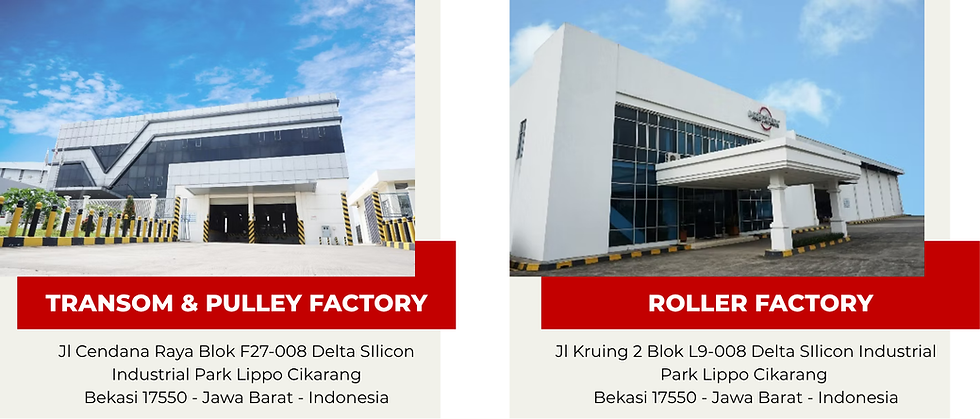
Vortex goes to Mining Indonesia 2026
Mining Indonesia 2026 adalah pameran internasional yang berfokus pada industri pertambangan, mineral processing, material handling, dan alat berat, serta menjadi salah satu agenda penting bagi pelaku industri di Indonesia.
Dalam ajang Mining Indonesia 2026, PT Vortex Conveyor International akan memperkenalkan berbagai solusi conveyor yang dirancang untuk membantu perusahaan meningkatkan efisiensi operasional dan keandalan sistem transportasi material.


Comments